When Does a Tooth Need to Be Extracted? 7 Signs It May Not Be Saved
Severe toothache, a cracked tooth or repeated infections can leave you wondering whether your tooth needs removing. Discover seven warning signs, how dentists decide whether a tooth can be saved, and when an urgent dental assessment may be necessary.
By Night & Day Team
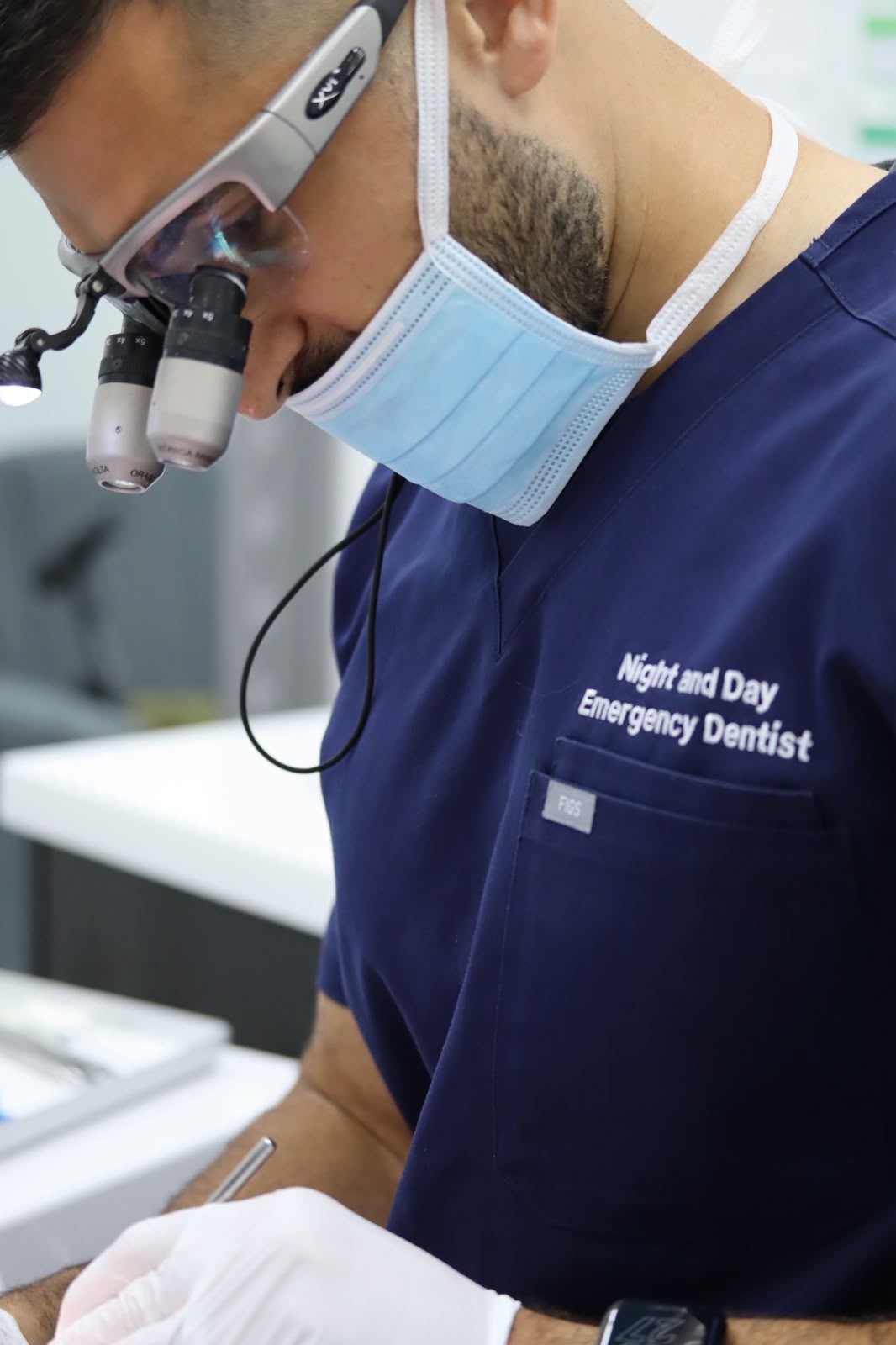
When does a tooth actually need to be extracted?
A tooth may need to be extracted when it is too badly decayed, damaged or infected to be saved with other dental treatments. Severe pain, swelling, a loose tooth or a deep crack can be warning signs, but none automatically means extraction is necessary. A dentist must examine the tooth, often with X-rays, before deciding whether it can be restored.
In many cases, treatments such as fillings, crowns or root canal treatment can preserve a natural tooth. However, when the damage is too extensive or the tooth cannot be supported properly, removal may be the safest long-term option.
Understanding the warning signs can help you recognise when to seek dental advice, what treatments might be available and when an emergency dental appointment is important.
7 signs you may need a tooth extraction
1. Severe or persistent toothache
A toothache that keeps returning, becomes increasingly painful or prevents you from sleeping should never be ignored.
Persistent pain can be associated with deep decay, inflammation inside the tooth, infection or damage to the surrounding tissues.
You might notice:
- Constant throbbing or aching.
- Sharp pain when biting or chewing.
- Pain that spreads towards your jaw or ear.
- Sensitivity to hot or cold drinks that lingers.
- Discomfort that continues despite taking suitable pain relief.
These symptoms do not necessarily mean the tooth needs removing.
For example, if the pulp — the soft tissue containing nerves and blood vessels inside your tooth — becomes infected, root canal treatment may allow the tooth to be saved.
However, if the tooth is too extensively damaged to restore, extraction may be recommended.
What should you do? Arrange a dental assessment rather than repeatedly relying on painkillers. Severe pain affecting sleep or daily activities may require an urgent appointment.
2. Extensive tooth decay that cannot be repaired
Tooth decay is one of the common reasons a tooth may eventually require extraction.
Decay develops when acids produced by bacteria damage the tooth's protective enamel. If untreated, the damage can progress into the deeper layers.
Early decay may be managed with preventive treatment. A cavity may require a filling, while more substantial damage could need a crown or root canal treatment.
The difficulty comes when so much healthy tooth structure has been lost that a reliable restoration is no longer possible.
For example, a tooth may have:
- A large cavity extending beneath the gumline.
- Very little healthy structure remaining above the gum.
- Extensive damage around an existing filling or crown.
- Decay affecting areas that cannot be predictably restored.
A dentist will assess whether enough healthy tooth remains to support a lasting repair.
A tooth that looks badly damaged is not automatically beyond saving. Equally, a relatively small visible cavity can sometimes conceal more extensive decay.
3. A cracked or broken tooth extending below the gumline
Not every broken tooth needs extracting.
Small chips can often be repaired with composite bonding, while larger fractures may be treated with a crown.
However, the location and direction of a crack make an important difference.
A crack extending deep beneath the gumline or into the root can make a tooth difficult or impossible to restore predictably.
Possible symptoms include pain when releasing your bite, sensitivity to temperature, discomfort when chewing or repeated inflammation around the affected tooth.
Some cracks are difficult to see without a dental examination.
If a tooth has split into separate sections or developed a vertical root fracture, extraction may be necessary.
Avoid chewing on the affected side until the tooth has been assessed. Continuing to bite on a fractured tooth may worsen the damage.
4. A dental abscess or infection that cannot be successfully treated
A dental abscess is a collection of pus caused by a bacterial infection.
It can develop around the root of a tooth or within the surrounding gum tissues.
Symptoms may include:
- Intense toothache or tenderness.
- Swelling around the gum, face or jaw.
- A bad taste in your mouth.
- Pain when biting.
- Fever or feeling generally unwell.
- Difficulty opening your mouth.
A dental abscess requires urgent dental assessment because the infection will not reliably resolve without appropriate treatment.
Importantly, an infected tooth does not always need extracting.
Depending on the cause and condition of the tooth, treatment might involve draining the infection, root canal treatment or extraction.
Antibiotics may be appropriate in certain circumstances, particularly when infection is spreading or causing systemic symptoms, but they do not replace treatment of the underlying dental problem.
If the tooth cannot be restored or infection persists despite appropriate treatment, removal may be considered.
5. A loose adult tooth caused by advanced gum disease
Healthy adult teeth should not normally feel loose.
If a permanent tooth starts moving, one possible explanation is advanced periodontal disease, commonly known as gum disease.
This condition can damage the tissues and bone supporting the teeth.
Early warning signs may include bleeding gums, persistent bad breath, gum recession and inflammation.
As gum disease progresses, some teeth can lose enough support to become mobile.
Treatment may involve professional cleaning beneath the gums, improved plaque control and periodontal care.
However, if supporting bone loss is severe and a tooth has a poor long-term prognosis, extraction may be recommended.
A loose tooth does not automatically mean it cannot be saved. Its mobility, remaining bone support, bite and overall periodontal condition all influence the decision.
If an adult tooth suddenly becomes loose following an injury, seek urgent dental advice.
6. Repeated problems with a previously treated tooth
A tooth that has already undergone extensive treatment may sometimes develop further complications.
For example, a tooth with an existing root canal filling might develop another infection, or a heavily restored tooth may fracture.
You might experience recurring pain, swelling, tenderness when biting or a persistent gum swelling near the tooth.
These symptoms do not automatically mean previous treatment has failed beyond repair.
Depending on the circumstances, a dentist may consider root canal retreatment, replacing a restoration or referring you to a specialist.
However, if the remaining tooth structure is insufficient, a fracture is untreatable or further treatment has an unfavourable prognosis, extraction may become the more appropriate option.
The important question is not simply whether the tooth has been treated before, but whether further treatment offers a reasonable chance of keeping it healthy and functional.
7. A problematic or impacted wisdom tooth
Wisdom teeth are the final adult teeth to develop, usually appearing during the late teens or early adulthood.
Some emerge normally and never cause difficulties.
Others become impacted, meaning they cannot emerge fully because of their position or insufficient space.
A partially erupted wisdom tooth can trap food and bacteria beneath the surrounding gum, sometimes causing inflammation or infection known as pericoronitis.
Possible problems include recurring swelling, pain at the back of the mouth, decay, gum disease or damage to an adjacent tooth.
A dentist may recommend removal if the wisdom tooth repeatedly causes significant problems or develops disease that cannot be managed appropriately.
However, wisdom teeth do not routinely need removing simply because they are impacted.
If a wisdom tooth is healthy and not causing disease, monitoring may be more appropriate than extraction.
Can a badly damaged or infected tooth still be saved?
Yes. Even a tooth causing considerable pain may be treatable.
Dentists generally aim to preserve natural teeth where clinically appropriate because they support normal chewing, appearance and bite function.
Several treatments may be considered before extraction.
A filling may restore a tooth when decay has damaged a manageable amount of structure.
A crown can protect and rebuild certain weakened or extensively restored teeth, provided sufficient healthy structure remains.
Root canal treatment can remove infected or inflamed tissue from inside a tooth. The canals are cleaned, shaped and sealed, allowing the natural tooth to remain in place.
Periodontal treatment may improve the outlook for teeth affected by gum disease, depending on the severity of supporting tissue loss.
Sometimes a specialist opinion is useful, particularly when the possibility of saving a complex tooth is uncertain.
Not every tooth can be preserved, and attempting extensive treatment on a tooth with a very poor prognosis may not be in the patient's best interests.
The decision should balance the expected longevity of the tooth, treatment complexity, risks, costs and your individual preferences.
Root canal treatment vs tooth extraction: which is better?
If both options are clinically suitable, preserving the natural tooth is often preferable.
Root canal treatment aims to eliminate infection inside the tooth while retaining its structure.
Extraction removes the entire tooth, including its roots.
The most appropriate choice depends on whether the tooth can be successfully treated and restored.
Root canal treatment
Tooth extraction
Preserves the natural tooth
Removes the affected tooth
Treats infection inside the tooth
Removes the tooth associated with the problem
May require a crown afterwards
May require replacement planning
Requires sufficient remaining tooth structure
May be appropriate when restoration is not feasible
Has its own risks and possibility of failure
Involves healing and possible surgical complications
A tooth may be suitable for root canal treatment if its roots and surrounding support are sufficiently healthy and the remaining structure can support a restoration.
Extraction may be recommended where there is extensive decay, an untreatable fracture, severe loss of periodontal support or a poor prognosis despite available treatment.
Removing a tooth can also have longer-term consequences. Depending on which tooth is lost, neighbouring teeth may move and chewing function may be affected.
Replacement options can include a dental implant, bridge or denture, although not every missing tooth necessarily requires replacement.
Your dentist should explain the advantages, disadvantages and likely outcomes of the reasonable options before you decide.
How does a dentist decide whether a tooth needs extracting?
A dentist will usually begin by discussing your symptoms, medical history and previous dental treatment.
They will examine the tooth and surrounding gums, looking for decay, fractures, swelling, mobility and signs of infection.
X-rays may be needed to assess the roots, surrounding bone, hidden decay or possible infection.
Depending on the problem, additional tests may help establish whether the tooth's nerve is responding normally or whether biting pressure causes pain.
The assessment considers several questions:
- Can the underlying disease or infection be treated?
- Is enough healthy tooth structure available for restoration?
- Does the tooth have adequate bone and gum support?
- Is there a fracture that makes restoration unreliable?
- What is the likely long-term prognosis?
- What are the risks and benefits of alternative treatments?
A tooth extraction should be recommended on clinical grounds, not simply because the tooth is painful.
If you are uncertain about the recommendation, ask your dentist to explain why the tooth cannot reasonably be saved and whether a specialist opinion would be worthwhile.
When is an emergency tooth extraction necessary?
Not every tooth requiring extraction needs to be removed immediately.
However, urgent dental assessment may be necessary if you have severe uncontrolled toothache, significant swelling, suspected dental infection, trauma or a rapidly deteriorating dental problem.
The dentist's immediate priority is to identify the cause, assess the risks and provide appropriate treatment.
That treatment may involve drainage, a temporary procedure, root canal treatment, extraction or referral.
An urgent appointment does not guarantee that extraction will be performed during the same visit.
Seek emergency medical attention through A&E or 999 if you develop difficulty breathing, speaking or swallowing, severe swelling affecting your mouth or neck, or other serious symptoms suggesting a spreading infection.
For dental symptoms that are urgent but not immediately life-threatening, contact a dentist promptly or use NHS 111 if you cannot access dental care.
What happens during a tooth extraction?
If extraction is recommended, your dentist should explain the procedure and obtain your consent.
Most routine extractions are carried out using local anaesthetic to numb the area.
Once the anaesthetic is working, the dentist carefully loosens and removes the tooth.
You may feel pressure or movement, but you should not experience sharp pain. Tell the dentist immediately if you do.
Some teeth require a more complex surgical extraction, particularly when roots are difficult to access or a tooth has broken beneath the gumline.
In these cases, the dentist or oral surgeon may need to make a small incision or divide the tooth into sections.
After removal, gauze is placed over the socket to help control bleeding and allow a blood clot to form.
Your dentist will provide aftercare instructions suited to the procedure and your medical circumstances.
What should you expect after having a tooth removed?
Some soreness, minor bleeding and swelling are common after extraction.
A blood clot forms in the socket and plays an important role in healing.
For the first 24 hours, you will generally be advised to avoid vigorous rinsing, spitting or disturbing the extraction site.
Follow your dentist's instructions about eating, cleaning your mouth, physical activity and pain relief.
Avoid smoking or vaping because these can interfere with healing and increase the risk of complications.
After the initial period, gentle salt-water rinses may be recommended, depending on the instructions you receive.
One possible complication is dry socket, which occurs when the protective blood clot is lost or fails to form properly.
It can cause significant pain several days after extraction and requires dental assessment.
Contact a dentist if bleeding continues despite following pressure instructions, pain becomes severe or progressively worse, or you develop increasing swelling, fever or a persistent unpleasant taste.
Frequently asked questions about tooth extraction
Does severe toothache mean my tooth needs removing?
No. Severe pain can result from several conditions, including inflammation or infection that may be treatable without extraction. A dental examination is needed to establish the cause and whether the tooth can be saved.
Can an infected tooth be extracted?
Yes, extraction can be an appropriate treatment for some infected teeth. However, root canal treatment or drainage may allow certain teeth to be preserved. The timing and approach depend on the infection and your clinical condition.
Can a tooth be too damaged for root canal treatment?
Yes. Root canal treatment addresses problems inside the tooth, but it cannot repair every structural defect. If there is insufficient healthy tooth remaining, a serious root fracture or inadequate support, extraction may be necessary.
Is it better to remove a tooth or leave it alone?
That depends on the diagnosis. Some teeth can safely be monitored, while leaving an untreated infected or severely damaged tooth may cause further problems. Your dentist should explain the risks of treatment and of doing nothing.
Will I need a replacement after extraction?
Not always. The decision depends on the tooth's position, your bite, the condition of neighbouring teeth and your preferences. Your dentist can discuss implants, bridges, dentures or leaving the space where appropriate.
Can a loose adult tooth tighten again?
Sometimes mobility can improve after treating the underlying cause, particularly when inflammation contributes to the movement. However, teeth with extensive supporting bone loss may have a poor prognosis. An assessment is needed.
Can I request extraction instead of root canal treatment?
You can discuss your preferences and decline treatment, but a dentist must still determine whether the proposed extraction is clinically appropriate. They should explain reasonable alternatives, risks and longer-term consequences before obtaining consent.
Worried that your tooth may need removing?
Pain, swelling or a damaged tooth can make extraction seem inevitable, but many teeth can still be treated successfully.
The most useful next step is to establish what is causing the problem and whether the tooth can be restored.
If you are experiencing severe toothache, signs of infection or a badly damaged tooth, Night & Day Emergency Dentist can help you explore the appropriate route to urgent dental assessment.
Visit Night & Day Emergency Dentist to find relevant clinic information and contact options.
Seeking advice promptly may give you more treatment options and help prevent a dental problem from becoming more complicated.